


Removable Partial or Full Dentures
Your teeth can become worn down, cracked, or even fall out as you age. This can make it difficult to eat and speak. Dentures offer a quick and affordable way to replace missing teeth in your mouth. Cloud Dental provides the latest dental technology to give you the best possible care. Denture treatment is customized to each patient, and Dr. Samani can help you decide which option works best for you.
What Are Dentures?
Dentures are artificial teeth used to replace one or multiple missing teeth. This type of prosthetic device is custom-made to fit your mouth and restore the function of your teeth. Dentures can improve your quality of life by:
- Restoring your ability to talk and chew properly
- Enhancing your appearance and smile
- Increasing your self-esteem and confidence
Wearing dentures also helps to support the facial muscles and prevent sunken-in cheeks that can occur with tooth loss. Dentures may even promote your overall health by making it easier to eat a nutritious diet.
There are two types of removable dentures: partial and full. Partial dentures fill in the gaps left by one or multiple missing teeth, while full dentures replace all the teeth in your upper or lower jaw.
Types of Dentures
There’s no one-size-fits-all when it comes to restoring your smile. Here are the most common types of dental implants we offer:
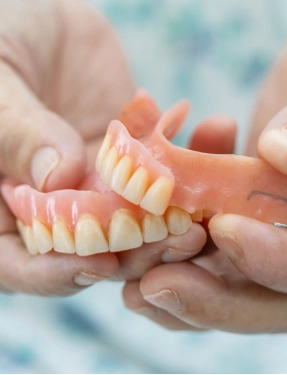
Partial Dentures
A partial denture fills in the spaces created by missing teeth. They are made of medical-grade metal and acrylic and are held in place by metal clasps or precision attachments.
When you lose one or a few teeth, it’s important to replace them as soon as possible. Your teeth play an important role in speaking, chewing, and maintaining the proper alignment of your bite. A partial denture can help you regain these functions. It also helps restore your smile and prevent your remaining natural teeth from shifting out of position.
Partial dentures are made by taking impressions of your teeth, which are then used to create a model of your mouth. The false teeth are then created based on the model, and the denture is fitted to your mouth to ensure a comfortable and secure fit.
Our dental professionals will use the latest technology and materials to create natural-looking dentures that blend in with your existing teeth.
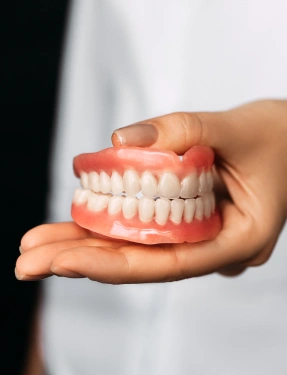
Full Dentures
You need full dentures if you've lost all of your teeth in either the upper or lower jaw or both jaws. This can be due to various reasons, such as tooth decay, periodontal disease, or trauma. Regardless of the cause, dentures can help to restore chewing function and improve the overall aesthetics of the smile.
Full dentures (also called complete dentures) are usually made of an acrylic resin base that looks like natural gums. The base covers the gum and the palate and supports a full set of artificial teeth.
The replacement teeth are held in place by natural suction or a small dental adhesive. The base must fit snugly over the gums, as loose-fitting dentures can cause irritation.
We know that your smile is unique, and Dr. Samani has the experience to help you select the teeth that appear most natural and harmonious in your smile. This gives you the option to customize your look, whether you want a "new" smile or just want to restore the one you had.
What to Expect
Dentures may take some time to get used to. It is important to eat soft foods and avoid chewing on hard objects until you become accustomed to wearing them. Dentures can also cause irritation and soreness of the gums. These side effects typically resolve as your mouth gets used to the denture.
Removable dentures must be replaced every five to eight years on average, although this will depend on how well they are cared for and how often they are worn. See a dentist regularly, even if you have dentures, as they can help spot any problems early on.
Removable Dentures After Care
Always keep your dentures clean, as food and bacteria can build up on them and lead to gum disease. Brushing your dentures daily with a soft-bristled toothbrush and non-abrasive cleanser will help to remove any build-up and keep it looking its best.
Rinse your mouth after eating, and avoid using harsh mouthwashes or toothpaste that could damage the appliance. Removing your dentures at night can help your gums rest and breathe. Finally, be sure to visit your dentist regularly to check the fit of your dentures and make any necessary adjustments.
Getting Your First Dentures
Removable dentures are available at Cloud Dental in Austin, TX. Our experienced professionals will work with you to create custom-fit dentures that feel and look like natural teeth. Whether you are looking for full or partial dentures, we can help you find the right fit. Schedule a consultation with Dr. Samani to see how we can help you get your smile back!