


Understanding Dental Crowns
A dental crown is arguably the most versatile tool in a dentist's toolkit. It has the potential to transform your smile and the way you feel about yourself. This dental restoration is an excellent way to restore tooth structure and shape and improve aesthetics. Aside from strengthening your teeth, crowns can prevent more extensive dental work like tooth extraction and root canals, which can be expensive and painful. This guide will answer some of your questions about the process, including the different types of crown materials, their pros and cons, and whether they're right for you.
What are Dental Crowns?
Dental crowns are essentially tooth-shaped caps that encircle the tooth, strengthening it and making it look new again. They can protect weak teeth from damage or hold together a cracked tooth. If you have a tooth that is badly stained, misshapen, or chipped, a dental crown can give it a new lease on life.
Crowns are typically more expensive than dentures or veneers, but they offer several benefits. They are less likely to become loose or fall out than other types of dental restoration, and they look like natural teeth. Crowns are also a good option for people who are uncomfortable wearing a traditional dental prosthesis.
Who Needs Dental Crowns?
Dental crowns are used for both functional and cosmetic reasons. For example, a crown may be used to:
- Protect a weak tooth from breaking
- Restore a broken tooth
- Cover and support a large filling when there isn't enough tooth remaining
- Hold together parts of a cracked tooth
- Attach bridges or dentures
- Provide a natural-looking tooth replacement for dental implants
What is the Difference Between a Crown and a Veneer?
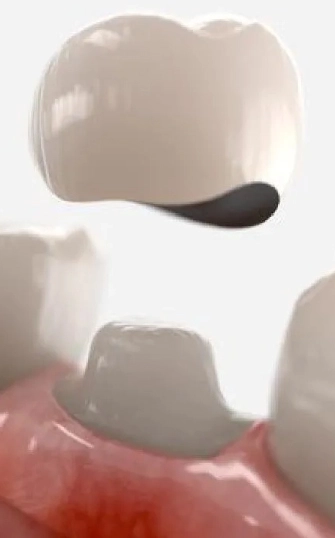
CROWN
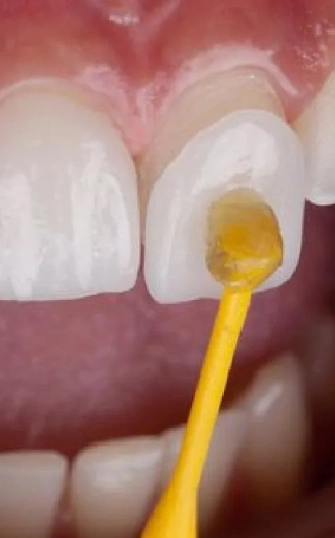
VENEER
Dental crowns and veneers help restore your smile's appearance, but they work differently. A veneer is thinner than a crown, so it doesn't require as much tooth reduction as a crown. Think of it as a sturdy wallpaper that covers a dull and damaged wall. It only covers the surface and does not compromise the integrity of your teeth.
A dental crown covers the entire tooth above the root. It provides more structural support than a veneer, making it ideal for teeth that have been weakened by deep pits or fractures. Crowns are more complex than veneers since they require preparation work, such as removing decayed or damaged parts of your teeth and replacing them with new material. They also take longer to set.
Which option is best for you will depend on your teeth' condition and your dental care budget. Dr. Samani will examine your teeth and discuss your goals for treatment before making a recommendation.
What are Onlays and 3/4 Crowns?
Onlays and ¾ crowns are also known as partial crowns. These are more conservative restorations that are only indicated if you have enough healthy tooth structure. Unlike a full dental crown, partials only cover a portion of the tooth. An onlay covers the tooth's chewing surface and extends to one or more cusps (the raised points at the top surface of the tooth).
In contrast, a 3/4 crown covers three-quarters of the tooth. It is typically used when the tooth is too damaged for a dental filling but not enough for a full-coverage crown.
Placing an onlay is similar to that placing a filling. The tooth is first cleaned and prepared, and then an impression is taken. The onlay is fabricated in a dental laboratory and bonded to the tooth using dental cement. The procedure for 3/4 crowns is the same, except it may be necessary first to remove some of the existing tooth structure to create room for the crown.
What are Dental Crowns made of?
Crowns can be made out of metal, porcelain, gold alloys, or other materials, depending on their use.
Metal crowns are often used for teeth that are heavily damaged or have been treated with root canal therapy. They are also commonly used for molars, which bear a lot of chewing force. Metal crowns can be made from different types of metals, including gold, silver, or nickel.
Pros:
- Very strong and durable and can last many years
- Can be installed in the front or back teeth
- Less likely to chip, crack, or stain than other types of crowns
- Cheaper than other crowns
Cons:
- May cause allergies and sensitivity in some people
- Not as aesthetically pleasing as porcelain crowns
A porcelain-fused-to-metal (PFM) crown is a dental restoration that combines the aesthetic qualities of porcelain with the strength and durability of metal. It is made by first creating a mold of the tooth, then placing it in an oven at high temperatures to bond the porcelain to the metal base. This creates a durable but natural-looking tooth that will last many years.
Pros:
- Durable and long-lasting
- Can be used in a variety of situations
- More aesthetically pleasing than metal crowns
- Cheaper than all-porcelain
Cons:
- Some metals may cause allergies
- Porcelain can chip or fracture, exposing the metal underneath
- Lacks the light-reflecting properties of porcelain or ceramic
All-resin crowns are made entirely out of plastic or composite material. They can be used to improve the appearance of a tooth without looking fake or out of place. While they can provide a more natural look than metal crowns, they may not be as strong or durable.
Pros:
- Match the color of your natural teeth
- Do not cause allergies
- The most affordable dental crowns
Cons:
- Wear out easily
- May need to be replaced often
- More likely to chip or break
- More prone to staining
All-porcelain crowns, also known as ceramic crowns, are made entirely from porcelain. Porcelain crowns are some of the most aesthetically pleasing dental crowns available today. While all-porcelain crowns are primarily chosen for their cosmetic benefits, they also have several functional advantages over other dental crowns. Porcelain is a highly durable material that can withstand the rigors of daily use. All-porcelain crowns are also less likely to cause allergic reactions than metal crowns.
Pros:
- Best aesthetic to match natural teeth
- Metal-free and non-toxic
- Best choice for front teeth restorations
Cons:
- Can cost twice as much as other crowns
- More likely to chip or break than metal crowns or PFM
- Not ideal for molars
Pressed ceramic crowns are an increasingly popular choice for dental patients looking for a durable, natural-looking restoration. The crown is made from high-strength ceramic materials that are pressed into shape using hydraulic presses. Once the desired shape has been achieved, the crown is fired with enamel porcelain to strengthen it. Although they typically cost more than other types of crowns, pressed ceramic crowns are a good investment for oral health. With proper care, they can last for many years and help you maintain a healthy, beautiful smile.
Pros:
- Durable because of the strong ceramic core
- Dentists can fabricate these in one appointment using CAD-CAM technology
- Great for front teeth restorations
- Match the color of your teeth
Cons:
- Can be expensive
- The glaze can wear down, exposing the underlying ceramic and making your teeth look yellow or stained
- Can break or chip easier than metals or PFMs
Zirconia crowns are a type of dental crown made from zirconium oxide, a strong, durable material that looks similar to natural tooth enamel. In addition to their cosmetic benefits, zirconia crowns are known for their superior strength and durability.
Pros:
- Stronger than porcelain and PFM
- Looks like natural teeth
- Great for back teeth restorations
- Biocompatible
Cons:
- Cost as much as all-porcelain crowns
- Not as translucent as porcelain and may not produce the same aesthetic results on the front teeth
- Not as widely available as other types of crowns

Dental Bridges
If you are suffering from tooth loss, you are not alone. According to the American College of Prosthodontists, around 120 million people in the US are missing at least one tooth. And while dental implants are the preferred option for tooth replacement, bridges are still popular, especially among patients who want a better non-surgical alternative to dentures.
What is a Dental Bridge?
A dental bridge is a tooth restoration method used to replace one or more missing teeth. Bridges are usually made of porcelain or ceramic and are supported by either natural teeth or implants. A typical bridge consists of an artificial tooth (pontic) attached to crowns (abutment teeth) on each side. It joins two teeth that are either next to each or on the same arch.
Dental bridges are an important tool for restoring your smile after you've lost a tooth. Not only do they improve the aesthetics of your smile, but they also help to prevent your remaining teeth from shifting out of place. Bridges are less expensive than implants and can be completed in just two visits to the dentist. They are also more durable than dentures and will not slip or move around in your mouth as dentures can.
Candidates for Dental Bridge
To be a candidate for a dental bridge, you must have healthy gums and adequate bone support for your teeth. If you have periodontal disease or other issues with your gums, the dentist will address these first before proceeding with a dental bridge.
Also, you must have natural teeth on either side of the space to support the restoration. The adjacent teeth are prepared by removing a portion of enamel to make room for crowns. These teeth will bear most of the chewing force when you eat, so they must be strong enough to handle this additional stress. Once the supporting crowns are in place, an artificial tooth is suspended between them.
It is also important to consider your bite when deciding if a dental bridge is right for you. If your bite is not aligned properly, this can put undue stress on the dental bridge and cause it to fail prematurely. Dr. Samani will check if your bite is properly aligned before the procedure.
Advantages of Dental Bridges
Here are some of the advantages that dental bridges can offer:
- They can help restore your smile after you have lost one or more teeth
- They can help bring back the chewing function of your teeth
- They can help restore your ability to talk normally
- They can help correct any misalignment issues in your bite
- They are durable and can last for many years
- They can help prevent the remaining natural teeth from shifting out of position
Disadvantages of Dental Bridges
There are also some potential disadvantages to consider before getting a dental bridge
- They require healthy adjacent teeth
- It may take some time to feel comfortable eating and speaking with a dental bridge
- They're not permanent and will eventually need to be replaced
- Dental bridges typically cost more than other tooth replacement options
- The abutment teeth may become damaged over time from supporting the bridge's weight
- The spaces between the false teeth and your gums can trap food and plaque, leading to decay and gum disease
Types of Dental Bridges
There are four main types of dental bridges: traditional bridges, cantilever bridges, resin-bonded bridges, and Maryland-bonded bridges. Each type has its benefits and drawbacks. Dr. Samani will help you decide which type is best for you.
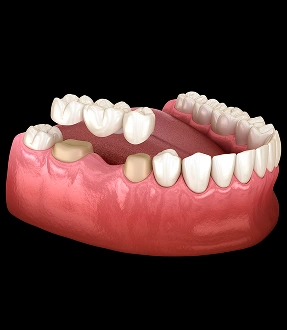
Traditional Dental Bridge:
The traditional fixed bridge is the most widely used dental bridge. The structure is composed of two crowns with false teeth in between. The crowns are attached to the healthy teeth next to the gap, and the false tooth fills the space where the missing tooth used to be.
The drawback to choosing a traditional dental bridge is that your abutment teeth may need to be altered significantly to accommodate the dental crown supporting the false tooth. It may require a large amount of enamel from your abutting teeth, causing issues later on when they may not have enough strength even after being crowned. These abutment teeth can eventually become cracked or chipped without adequate protection and care. While this type of dental bridge provides excellent results and stability, it is usually more expensive compared to other types of bridges due to each of the unsupported crowns required for each side.
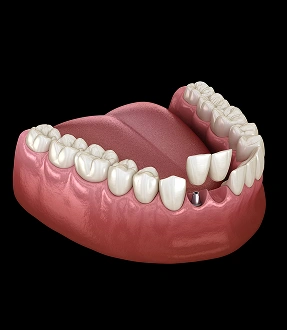
Cantilever Dental Bridge:
Unlike a traditional bridge that uses two crowns on each side of the gap, a cantilever dental bridge is supported by one or more teeth on only one side of the missing tooth. This type is used when you have healthy teeth next to a gap, but not on both sides.
There are several advantages to using a cantilever bridge. One advantage is that it does not require as much preparation of the adjacent teeth as a traditional bridge does. This can be important if the adjacent teeth are in good condition and need not be altered. Another advantage is that cantilever bridges can be less expensive than traditional bridges because they require less work to prepare the adjacent teeth.
As with its drawbacks, cantilever bridges can put extra stress on the supporting tooth, causing it to break or loosen over time. Another disadvantage is that they may not look as natural as a traditional bridge because they only support the pontic on one side.
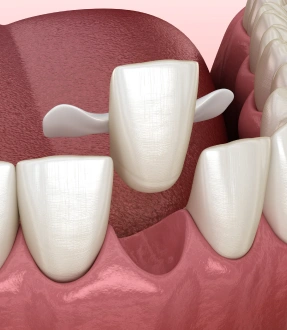
Maryland Dental Bridge:
Maryland dental bridge, also known as a resin-bonded bridge, is similar to a traditional bridge requiring two natural supporting teeth on each side of the gap. However, the pontics in a resin-bonded bridge are connected to a metal or porcelain framework instead of crowns. The wing-shaped framework is then bonded to your natural teeth using a resin adhesive.
Resin-bonded bridges are less expensive than traditional bridges and require minimal teeth preparation. The drawback to resin-bonded bridges is that the metal wings are visible when you smile or open your mouth wide.
They are also less expensive than other dental bridges, but they are less strong and durable. Dentists usually use them for front teeth replacements, where they are not subject to as much force as the back teeth.
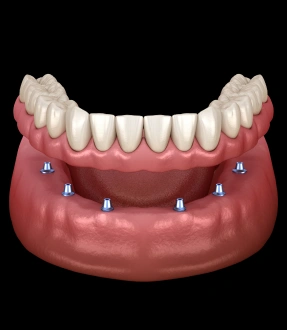
Implant-Supported Dental Bridge:
With implant-supported bridges, the artificial teeth are supported by one or more dental implants. Unlike a traditional dental bridge, supported by the natural teeth adjacent to the gap, this bridge is supported by one or more titanium posts surgically implanted into the jawbone. The number of implants required to support an implant-supported bridge varies, depending on the size and location of the missing teeth. In some cases, as few as two implants may be sufficient. However, more commonly, four to six implants are needed. Placing the bridge requires two minor surgeries: one to install the fixtures into the jawbone and another to place the custom-made bridge.
Although implant-supported bridges are more expensive than traditional bridges, they offer many benefits, including improved function and aesthetics, increased comfort level, and greater durability. Additionally, they can help preserve the jawbone and prevent further bone loss.
Although implant-supported bridges are more expensive than traditional bridges, they offer many benefits, including improved function and aesthetics, increased comfort level, and greater durability. Additionally, they can help preserve the jawbone and prevent further bone loss.
Frequently Asked Questions
Understanding Your Dental Bridge Options
A dental bridge is a tooth restoration method used to replace one or more missing teeth. Bridges are usually made of porcelain or ceramic and are supported by either natural teeth or implants. A typical bridge consists of an artificial tooth called a pontic, which is attached to crowns known as abutment teeth on each side. This combination effectively joins two teeth that are either next to each other or on the same arch.
In the case of traditional dental bridges, the structure is composed of two crowns with false teeth in between. The crowns are carefully designed to match the shape and color of your natural teeth, providing a seamless appearance once the bridge is placed. These crowns are then attached to the healthy teeth adjacent to the gap left by the missing tooth. The false tooth, or pontic, fills the space where the missing tooth used to be, restoring both the appearance and functionality of your smile.
For cantilever dental bridges, the bridge is supported by one or more teeth on only one side of the missing tooth. This type of bridge is chosen when you have healthy teeth next to a gap, but not on both sides. By utilizing the adjacent healthy teeth as support, the bridge effectively fills the space left by the missing tooth, providing stability and functionality.
Maryland dental bridges, also known as resin-bonded bridges, require two natural supporting teeth on each side of the gap. However, unlike traditional bridges, the pontics in a resin-bonded bridge are connected to a metal or porcelain framework rather than crowns. This wing-shaped framework is then bonded to your natural teeth using a resin adhesive. This type of bridge is a less invasive option as it eliminates the need for crowns, providing an aesthetically pleasing result.
Implant-supported bridges, on the other hand, have the artificial teeth supported by one or more dental implants. These implants are surgically implanted into the jawbone, providing a secure and permanent attachment point for the bridge. The implants serve as strong anchors, ensuring stability and durability for the bridge. This type of bridge is an excellent solution when multiple teeth are missing or when the adjacent teeth are not strong enough to support a traditional bridge.
In summary, dental bridges can be supported by natural teeth with crowns, implants, or a combination of both, depending on the type of bridge chosen. Each type of bridge has its own unique attachment points and advantages, allowing for customized solutions to restore your smile and improve oral functionality.