

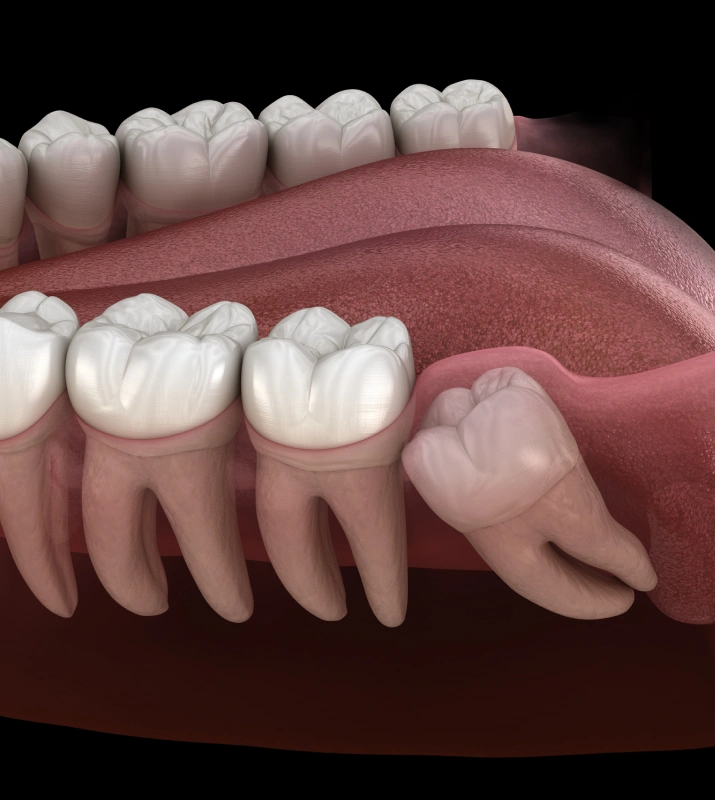
Reasons to Remove Wisdom Teeth
Wisdom teeth are the last molars to appear, usually in the late teens or early twenties. While some people never experience problems, many develop complications as these teeth often grow at improper angles, crowd nearby teeth, or become trapped beneath the gums. This can lead to pain, swelling, infection, and long-term bite issues.
At Cloud Dental, we provide safe and convenient in-house wisdom tooth extractions. Early evaluation allows us to track your wisdom teeth as they develop and address concerns before they become serious. Having the procedure performed in our office ensures a smooth, coordinated experience without the need for outside referrals. Proactive removal can protect your oral health, prevent crowding, and reduce the risk of future complications.
What is Tooth Extraction?
A dental extraction is a process of removing a decayed or damaged tooth from its socket in the bone. It is also known as exodontia or simply pulling a tooth. There are two main types of tooth extractions: simple and surgical.
Simple Extractions are performed on teeth above the gum line and visible in the mouth. The majority of dental extractions are simple extractions. The procedure is typically performed using a pair of dental forceps, which are special pliers designed for grasping and removing teeth. The dentist will loosen the tooth with an elevator before carefully removing it from the socket.
Surgical Extractions are performed on teeth that cannot be seen in the mouth or when there is not enough room to perform a simple extraction. They often require a cut into the gum tissue so the dentist can access the tooth. Once the tooth has been removed, the incision will be closed with stitches. Surgical extractions are generally more complex and may require more healing time than simple extractions.
When is Tooth Extraction Necessary?
There are several reasons why your dentist may recommend a dental extraction. The most common reason is tooth decay which has damaged the tooth's structure beyond repair. Other reasons include the following:
- Impacted Tooth: This is a tooth that doesn't have enough room to erupt or grow into the mouth. Impacted teeth are often inner wisdom teeth. In some cases, they can cause pain and swelling and must be removed surgically.
- Gum Disease: Poor oral hygiene habits can lead to an infection of the gums and bones that support the teeth. When periodontal disease is severe, a tooth may become loose and need to be extracted.
- Crowding: When crowding occurs, the teeth can become crooked or even grow into the gum tissue. To correct this problem, the dentist may need to extract one or more teeth so that there is more room in the mouth.
- Fractured Tooth: When a tooth is fractured, it can be very painful and difficult to repair. In some cases, the best course of treatment is to extract the tooth. Removing the fractured or cracked tooth alleviates the pain and allows the mouth to heal properly.
- Infection or Abscess: This can cause inflammation and pain in the gums around the affected tooth. If left untreated, an infection can spread to other mouthparts. A root canal procedure may be able to save an infected tooth, but often it will need to be extracted.
- Malpositioned Teeth: These teeth do not erupt into the dental arch in their normal position or alignment. They may be angled too far forward or backward or rotated too far to the left or right. Malpositioned teeth can crowd the mouth and make it difficult to brush and floss properly, increasing the risk of tooth decay and gum disease.
The Extraction Process
The extraction process is typically quick and relatively painless and can be performed by a dentist or oral surgeon. The most common way to extract a tooth is the "elevation and forceps" method. This involves using a small tool to loosen the tooth from the bone and gum tissue and then using a pair of forceps to remove the tooth. The first step is the injection of an anesthetic to numb the area around the tooth. This will help minimize any discomfort during the procedure. When the area is numb, the dentist will loosen the tooth from the bone using an elevator. It's a small tool inserted into the tooth socket to pry the tooth free gently.
The dentist will then use a pair of forceps to remove it from the mouth. The forceps are a type of pliers that are specifically designed to grip and remove teeth. After tooth extraction, the dentist will clean the area and may place a gauze pad over the socket to help control bleeding. The extraction site will most likely heal within a week or two.
Sectioning a Tooth
Tooth extraction is usually a safe procedure. Complications, such as damage to surrounding teeth, infection, and nerve damage, are rare but can occur. Follow your dentist's instructions for proper care after extraction to help minimize any complications and promote healing.
After tooth extraction, taking care of the space left behind is important. Usually, a blood clot forms in the socket to help protect the bone and nerve endings while they heal. Make sure not to disturb this blood clot, as it can lead to pain, bleeding, and infection.
For this reason, please avoid smoking or drinking through a straw at least 24 hours after the procedure. Eating soft foods and avoiding hard or crunchy foods can also help to prevent dislodging the blood clot.
It's normal to experience some bleeding and soreness for a few days. Here's what you can do during the healing process:
- Bleeding: You can expect some bleeding for the first few hours after your tooth is extracted. To help control the bleeding, bite down on a gauze pad placed over the extraction site. Apply gentle pressure for 30-45 minutes. You may need to replace the gauze several times before the bleeding stops completely.
- Swelling: Some swelling is also normal after an extraction. To help reduce swelling, apply a cold compress to the outside of your cheek for 20 minutes. Do this as often as needed for the first 24-48 hours after your procedure.
- Pain: You may experience pain or discomfort after tooth extraction. Over-the-counter pain medication like ibuprofen or acetaminophen can help manage any discomfort you're experiencing. If you're still in pain after 48 hours, contact your dentist for additional recommendations.
After a tooth is extracted, you will have a gap in your smile where the tooth used to be. The good news is that this can be temporary! Our clinic offers several options for replacing missing teeth, including bridges, dental implants, and partial dentures. Dr. Samani will help you choose the best option that fits your needs and budget.
how long does it take for wisdom teeth holes to heal?
The healing process for wisdom teeth extraction sites varies from person to person, but it generally follows a predictable timeline:
- Initial Healing Phase (First Week): The first few days after surgery are critical for blood clot formation in the tooth sockets. This clot is essential for healing, acting as a protective layer over the underlying bone and nerves and supporting the development of new tissue. Swelling and discomfort typically peak around the second day and gradually improve. Most people can resume normal activities within a week, although it's important to continue eating soft foods and avoid vigorous physical activity to prevent dislodging the clot.
- Soft Tissue Healing (Two Weeks to One Month): Over the next two to four weeks, the gum tissue starts to heal and close over the extraction site. However, it's still important to be careful with the foods you eat and how you clean your mouth, as the area is sensitive and can be prone to infection.
- Bone Healing (One Month to Six Months): The bone in the jaw where the wisdom teeth were located begins to remodel and fill in the space over several months. Complete bone healing might take up to six months or more, depending on the individual's health, age, and the complexity of the extraction.
- Full Healing (Six Months to a Year): While soft tissue healing is relatively quick, the bone can take much longer to fully recover. The exact duration depends on various factors, including the size of the original tooth and the condition of the jawbone before the extraction. Some people may feel completely normal within a few months, while others might notice subtle changes for up to a year.
Throughout the healing process, it's important to follow your dentist or oral surgeon's post-operative care instructions carefully. This includes maintaining oral hygiene by gentle rinsing with salt water, avoiding smoking and using straws, and eating soft foods to avoid complications. Regular follow-up appointments are crucial to monitor healing and address any concerns promptly. If you experience persistent or severe pain, swelling, or signs of infection at any point during the healing process, contact your healthcare provider for advice.